adobe stock image of red tech background

Technology and Democracy Research Hub

Mission

The Technology and Democracy Research Hub examines how social media, artificial intelligence, and emerging technologies influence political behavior. Through rigorous research and collaboration with community members and practitioners, the Hub generates insights with national impact, contributing to the broader understanding of democracy’s evolution in the digital age.

Our Key Research Areas:

· Measuring Social Media Trends and Civic Participation: Examining how online discourse influences voter behavior, political engagement, and trust in democratic institutions.

· The Role of Generative AI, Polarization, and Misinformation in Democracy: Analyzing how emerging technologies contribute to the spread of false information, political division, and public trust in media.

· Platform Design, Policies, and Civic Engagement: Investigating how social media platforms’ algorithms, moderation policies, and content recommendation systems shape civic participation and democratic discourse.

Applications for our Fall 2026 Internship have closed.

 Please check back later this year for applications for our Spring 2027 Cohort!

b roll shot

Previous Cohorts

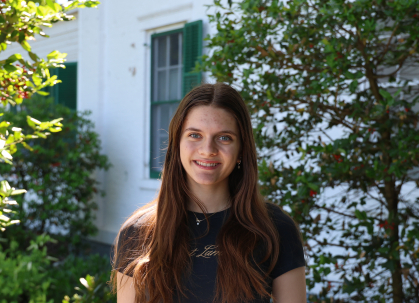
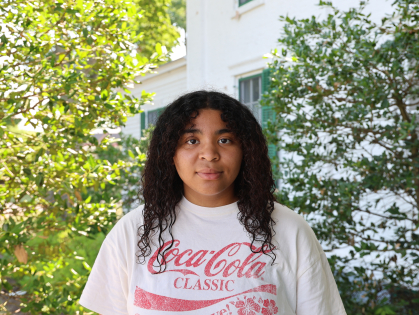
  • Bella Ayres

    Bella Ayres

    Bella Ayres is a sophomore double-majoring in English and Philosophy with a minor in Psychology. She is a legal intern at the Matus Law Group, Internal Vice President of the Rutgers Pre-Law Society, and an Aresty Research Assistant. Bella plans to attend law school and pursue a career in estate planning or copyright law.

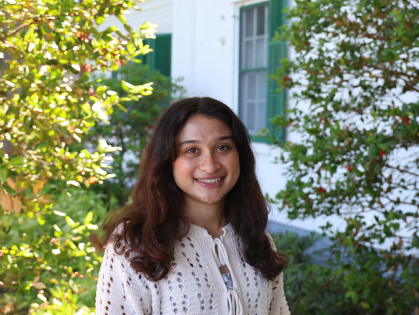
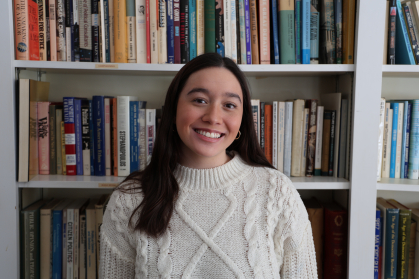
    Daniel

    Daniel Benimovich

    Daniel Benimovich is a sophomore in the Rutgers Honors College majoring in Biomedical Engineering with a minor in Business Administration. His interest in technology and democracy stems from independent research on social media and young men's mental health. Daniel also  volunteers as an EMT.

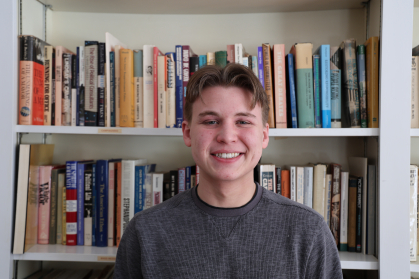
    Lewis Fang

    Lewis Fang

    Lewis Fang is a student at the Rutgers Honors College majoring in Political Science and Piano Performance. Outside of the Hub, he is a research analyst for the Rutgers Consulting Group. Lewis is a self-published author of 3 books and enjoys researching aviation and misinformation in his free time.

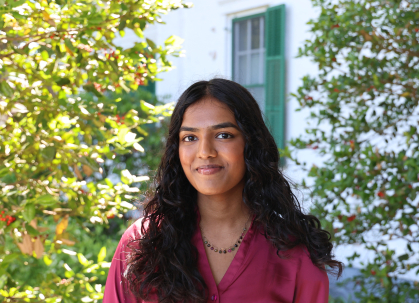
    Julian

    Julien Thiberge

    Julien Thiberge is a junior Electrical Engineering major. He maintains autonomous underwater gliders for marine science research, works at the Princeton University Art Museum, and is a member of the IEEE-Eta Kappa Nu Honor Society. He is interested in propaganda, ocean engineering, and science policy.


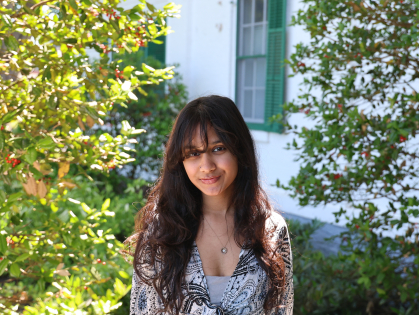
    Venya

    Venya Tiwari

    Venya Tiwari is a sophomore studying Aerospace Engineering. She is a Trade Study Lead for the Rutgers STAR SpiceSAT Structures Team. She worked as a Consulting Analyst for the Rutgers Consulting Group. She hopes to work at the intersection of aerospace engineering, technology, and AI policy.


Media Literacy Resources

Media literacy is a "necessary, inevitable, and realistic response to the complex, ever-changing electronic environment and communication cornucopia surrounding us." (National Association for Media Literacy Education)

Here are some tools and reference materials to improve your awareness of problematic content and navigate the constant stream of information more confidently.

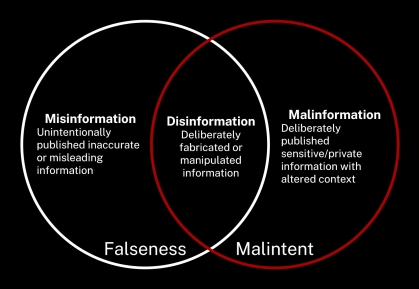
  • The American Psychological Association defines misinformation as false or inaccurate information, or "getting the facts wrong." 

    Disinformation is false information which is "deliberately intended to mislead – intentionally misstating the facts." 

    The spread of both misinformation and disinformation has serious consequences for our democracy; the first step to combatting it is being able to recognize it. 

    Ven Diagramm visualizing mis, dis, and mal information
    Source: College of Staten Island CUNY Library
    • Rutgers University Libraries: Evaluating Information and Identifying Information & Media Bias

      These research support tools include tutorials, quizzes, and videos that cover the basics of evaluating resources for authority, accuracy, and other criteria.

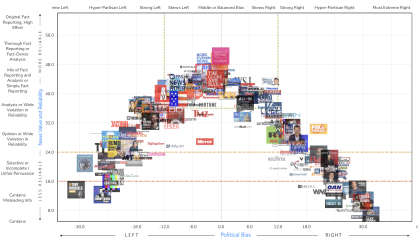
    • It is a good idea to explore a variety of sources when checking the news, as long as you are aware of a source's potential bias. You can check a media outlet's bias using the Ad Fontes' Chart, which rates media sources in terms of political bias and reliability. Access the interactive chart here.
    Ad Fontes Media Chart
    Source: Ad Fontes Media
  • Fact-Checking Tools:

    • Politifact: a nonpartisan fact-checking journalism site, this is run by the Poynter Institute. Assigns Truth-O-Meter ratings to statements and claims in the media.
    • FactCheck.org: a nonpartisan project of the Annenberg Public Policy Center at the University of Pennsylvania, this is a platform for voters that "aims to reduce the level of deception and confusion in U.S. politics."
    • The Washington Post Fact Checker: focuses primarily on political stories and events.
    • Snopes: investigates and explains misinformation and rumors, including topics such as political news and entertainment.
    • Allsides: This news platform seeks to "free people from filter bubbles so they can better understand the world – and each other." Here one can find top stories on a specific issue from the Left, Right, and Center of the political spectrum. It also provides Media Bias Ratings for over 1,400 media outlets. 
    • ProCon from Britannica: This site helps readers develop a balanced view by exploring multiple perspectives around important political and cultural issues. It is also a great place to find sources for additional reading on a given topic.
    • Ground News : Acknowledging that it is not possible to consult a single news story for a well-rounded view on important issues, this site provides allows users to compare headlines and perspectives between news sources on stories happening in real time. 

Contact

For questions or to get involved, please email Eyal Hanfling or Atl Castro Asmussen.